
Dealing with bed bugs is stressful enough without wondering when it’s safe to put your clothes back after treatment. You’ve taken the important step of getting professional help, but now comes the tricky part—knowing exactly when you can return your laundry to your closet without risking another infestation.
If you’re feeling anxious about contaminating your fresh clothes or disrupting the treatment process, you’re not alone. This article will guide you through the safest timeline and best practices for handling your clothes after bed bug treatment, so you can protect your home and feel confident that the bugs are truly gone.
Keep reading to learn what you need to do—and what to avoid—to make your bed bug battle a success.
Timing To Reintroduce Clothes
Knowing the right timing to put clothes back after bed bug treatment is crucial. Clothes can harbor bed bugs and their eggs. Putting them back too soon can cause re-infestation. Waiting the correct time ensures the treatment kills all pests. It also keeps your clothes safe and clean. This section explains how long to wait and what signs show the treatment worked.
Waiting Period After Treatment
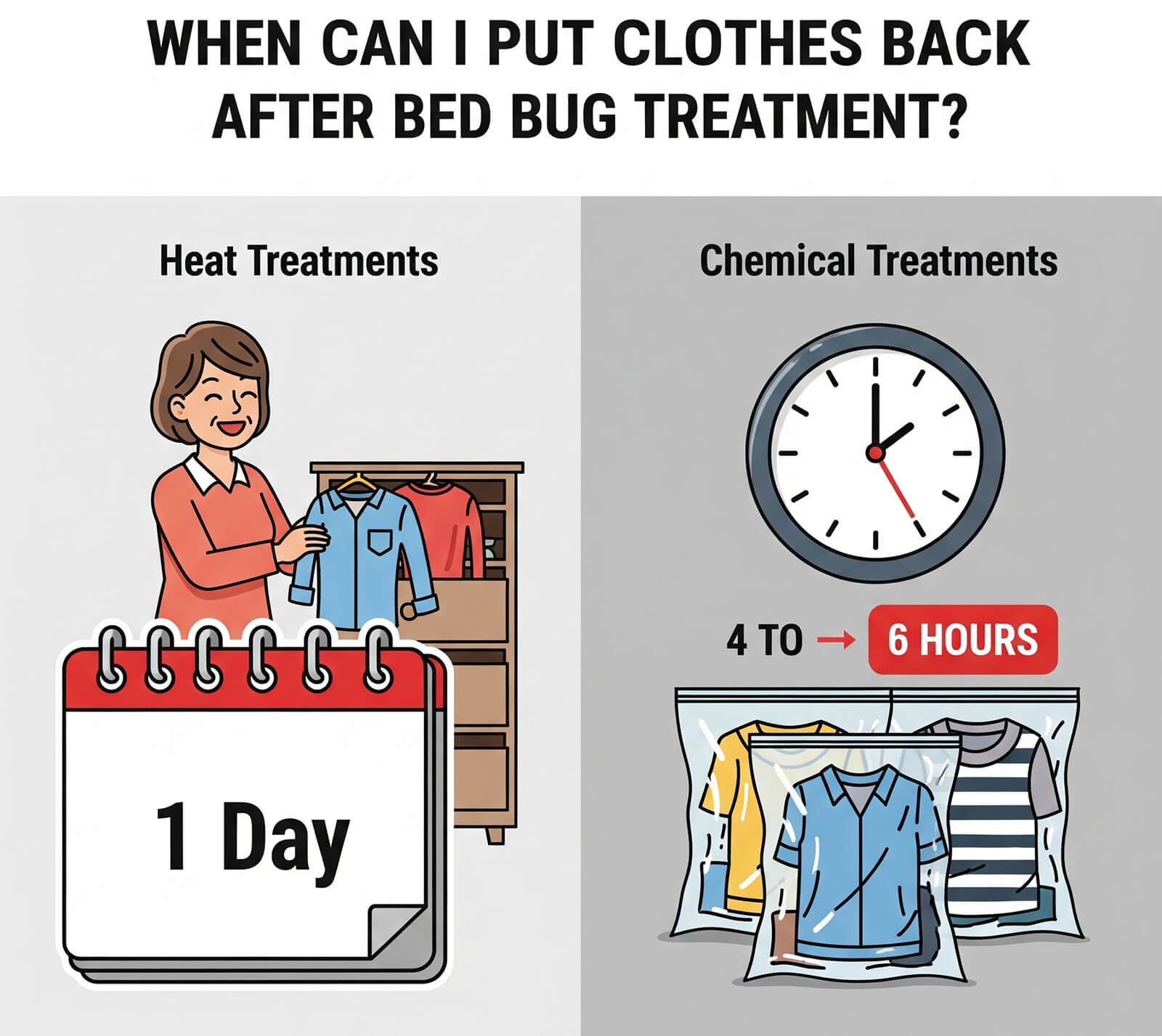
Wait at least 24 to 48 hours before handling clothes. This allows insecticides to settle and work fully. Some treatments require longer waiting times, up to a week. Follow the advice of your pest control professional. Avoid touching or moving clothes too early. This prevents spreading bed bugs to other areas. During this time, keep clothes sealed in plastic bags or containers.
After the waiting period, wash clothes in hot water. Heat kills any remaining bed bugs or eggs. Dry clothes on high heat for at least 30 minutes. This adds extra protection before putting clothes back in your closet or drawers.
Signs Treatment Is Effective
Look for fewer bed bug bites on your skin. Bed bugs leave itchy red marks. If bites decrease, the treatment is working. Check clothes and bedding for live bugs or shed skins. Seeing fewer or no bugs is a good sign. You may still see some bugs for days. This happens as eggs hatch after treatment. Patience is important during this phase.
Consult your pest control service if bugs persist after two weeks. They can recommend follow-up treatments. Successful treatment means no bugs in clothes or rooms. Your clothes will be safe to use again without risk.
Avoiding Common Mistakes
Knowing when to put clothes back after bed bug treatment is important. Avoiding common mistakes helps ensure the treatment works well. Careful actions protect your home and belongings from reinfestation. Follow clear steps to keep bed bugs gone for good.
Don’t Clean Treated Areas Immediately
Cleaning too soon can remove the insecticide needed to kill bed bugs. Wait for the time your pest control professional recommends. This pause lets the treatment fully work on all bugs and eggs. Avoid vacuuming or wiping surfaces until allowed.
Avoid Throwing Out Belongings
Throwing away furniture or clothes is often unnecessary and costly. Bed bugs hide in many spots, but professional treatment can reach them. Use mattress encasements to trap bugs inside beds. Dispose of items only if experts say it is needed.
Refrain From Using Extra Pesticides
Adding your own pesticides can cause problems and reduce treatment success. Some chemicals may react badly with the professional products. This can harm your health or void pest control guarantees. Trust the pest control company’s plan and wait for follow-up visits.
Preparing Clothes For Treatment
Preparing your clothes properly is a vital step in bed bug treatment. Clean and sealed clothes prevent bed bugs from spreading or hiding. This process helps protect your belongings and speeds up treatment success. Follow clear steps to prepare your clothes before and after treatment.
Proper Washing Techniques
Wash clothes in hot water to kill bed bugs and eggs. Use water at least 120°F (49°C) for best results. Dry clothes on the highest heat setting for 30 minutes. Heat from washing and drying removes bed bugs effectively. Avoid cold water as it will not kill them. Sort clothes to avoid damage and ensure thorough cleaning.
Sealing Clothes In Plastic Bags
After washing and drying, place clothes in clean, sealed plastic bags. Use heavy-duty bags that prevent bugs from entering or escaping. Label bags with dates to track treatment progress. Store sealed bags away from treated areas. This step stops re-infestation and protects clothes during treatment. Avoid using fabric bags or thin plastic that bugs can penetrate.
Following Professional Advice
Following professional advice is crucial after a bed bug treatment. Experts know the best steps to keep your home safe and clean. Their instructions help prevent the bugs from spreading or returning. Trusting their guidance ensures the treatment works fully and safely.
Consulting Pest Control Experts
Always talk to your pest control provider before putting clothes back. They know how long the insecticide stays active. This time varies by product and treatment method. Experts also advise on how to handle your clothes safely. They can tell you if items need extra washing or heat treatment. Consulting them avoids risks of re-infestation or exposure to chemicals.
Adhering To Recommended Timeframes
Follow the exact waiting period given by the professionals. This period protects you from harmful residues on clothes. It also allows the treatment to kill all bed bugs and eggs. Putting clothes back too soon can spread bugs again. Waiting too long might not cause harm but delays your return to normal. Stick to the timeline for the best results and safety.
Protecting Household Items
Protecting your household items after bed bug treatment is crucial. Proper care helps avoid reinfestation and keeps your home safe. Treating furniture and belongings carefully prevents bed bugs from hiding and spreading again.
Using the right methods for your mattress, furniture, and other items supports the treatment process. It also ensures you can put your clothes and belongings back without worry. Follow clear steps to protect what matters most.
Using Mattress Encasements
Mattress encasements trap bed bugs inside and stop new ones from entering. Choose high-quality, fully sealed encasements for both mattress and box springs. These covers kill bed bugs by starving them over time.
Install encasements after treatment but before putting clothes back. Keep them on for at least one year to prevent hidden bugs from escaping. Encasements also make bed bug detection easier during follow-ups.
Handling Furniture And Other Belongings
Furniture can hide bed bugs in cracks and seams. Avoid moving items too soon to prevent spreading bugs to other areas. Let professionals inspect and treat large belongings.
Clean smaller items with hot water or heat treatment. Seal belongings in plastic bags for a few weeks to starve any bugs inside. Avoid placing untreated items near clean clothes or beds.
.png?r=RGXqEV3/M/U=)
Credit: plunketts.net
Managing Pets And Safety
Managing pets and safety is crucial after bed bug treatment. Treatments use chemicals that can harm animals and people. Protecting your pets and yourself helps ensure a safe home environment. This section explains how to keep pets away and stay safe during and after treatment.
Keeping Pets Away From Treated Areas
Pets should stay out of treated rooms for the full recommended time. Chemicals can irritate their skin, eyes, or lungs. Keep cats, dogs, birds, and small pets in a separate safe space. Close doors and block access to treated areas. After treatment, clean pet bedding and toys separately. This prevents pets from touching any leftover residues. Follow your pest control expert’s advice on when pets can return.
Ensuring Personal Safety During Treatment
People should also avoid treated areas while chemicals dry. Stay away for the entire time advised by professionals. Use gloves when handling clothes or items from treated rooms. Wash clothes in hot water before wearing them again. Ventilate your home well once treatment ends. Fresh air helps remove chemical smells and residues. Keep children and elderly family members away from treated zones for safety.
Monitoring And Follow-up
Monitoring and follow-up are essential after bed bug treatment. They ensure the treatment’s success and help decide when you can safely put clothes back. Bed bugs can hide in tiny spaces and eggs may still hatch after treatment. Watching closely helps catch any remaining bugs early.
Regular checks reduce the chance of a new infestation. Follow-up steps guide you through cleaning, safety, and when to return belongings. Patience and careful observation protect your home and belongings from future problems.
Expecting Residual Bed Bug Activity
Bed bugs may still appear days or weeks after treatment. This is normal because eggs can hatch later. Seeing a few bugs does not mean the treatment failed. Instead, it shows the insecticide is working to kill them gradually.
Do not panic if you spot bed bugs after the first treatment. Continue monitoring and follow the pest control expert’s advice. Avoid moving items around to prevent spreading the bugs further.
Scheduling Follow-up Treatments
Most bed bug treatments require more than one visit. Follow-up treatments target any bugs missed the first time. Pest control professionals schedule these visits based on your infestation level and treatment type.
Keep in touch with your pest control company. They will advise the best times for follow-up treatments. These visits improve results and help you know when it is safe to put clothes back.
Credit: www.bedbugexterminatorpro.ca
Frequently Asked Questions
What Not To Do After Bed Bug Treatment?
Avoid cleaning treated areas immediately or discarding furniture without advice. Do not use extra pesticides or move items. Keep pets away and follow professional instructions. Stay out as recommended, monitor for bed bugs, and use mattress encasements to prevent reinfestation.
Can I Leave Clothes In My Dresser During Bedbug Treatment?
Do not leave clothes in your dresser during bedbug treatment. Wash, dry on high heat, and store clean clothes in sealed bags until treatment ends.
How Long Do You Keep Clothes In Bags After Bed Bugs?
Keep clothes sealed in bags for at least two weeks after bed bug treatment to prevent re-infestation and allow full effectiveness.
How Long After Bed Bug Treatment Can I Sleep On My Mattress?
Wait at least 4 hours after bed bug treatment before sleeping on your mattress. Follow your pest control professional’s specific instructions for safety. Use mattress encasements to prevent reinfestation and monitor for any bed bug activity in the following weeks.
How Long Should Clothes Stay Out After Bed Bug Treatment?
Wait at least 24 to 48 hours before putting clothes back inside treated areas.
Conclusion
Wait at least the time your pest control expert advises. This ensures insecticides fully work and eggs hatch. Avoid putting clothes back too soon to stop bed bugs returning. Use mattress covers to trap any leftover bugs safely. Keep monitoring your home for signs of bed bugs.
Patience and care help achieve a bed bug-free space. Follow professional advice closely for the best results. Your clothes and home will be safe again soon.