
If you’re a parent, you know how important it is to keep your child comfortable, especially during dry seasons or cold weather. The Frida Baby Humidifier is a popular choice for many families because it’s easy to use, quiet, and designed with safety in mind. But what happens when your Frida Baby Humidifier stops working? This can be stressful, especially if your baby is uncomfortable or having trouble sleeping. If you’re searching for answers, you’re not alone. Many parents experience issues with their Frida Baby Humidifier at some point. The good news is that most problems have simple solutions.
In this article, you’ll learn why your Frida Baby Humidifier might not be working, how to fix common issues, and how to keep it running smoothly for longer. You’ll find step-by-step troubleshooting, expert tips, and real-life examples that go beyond the basics.
Whether the humidifier won’t turn on, isn’t producing mist, or has a strange smell, you’ll get clear guidance to solve the problem. By the end, you’ll understand your device better, avoid common mistakes, and have the confidence to take action.
Let’s help you get your Frida Baby Humidifier working again so your baby—and you—can breathe easier.
How Does The Frida Baby Humidifier Work?
Before fixing a problem, it helps to know how the Frida Baby Humidifier functions. This device is an ultrasonic cool mist humidifier. It uses high-frequency vibrations to turn water into a fine mist, which is then released into the air to increase humidity. This can help relieve dry skin, stuffy noses, and coughs, especially in babies and young children.
Key parts of the Frida Baby Humidifier include:
- Water Tank: Holds the water that turns into mist.
- Ultrasonic Plate: Vibrates to create mist.
- Fan: Pushes the mist out of the device.
- Power Supply: Provides electricity to run the humidifier.
- Mist Nozzle: Directs the mist into the room.
Knowing these parts will make it easier to spot and fix issues. Most problems happen when one of these parts isn’t working as it should.
Common Reasons The Frida Baby Humidifier Is Not Working
If your Frida Baby Humidifier is not working, there can be several causes. Some are simple to fix, while others may need more attention. Here are the most frequent reasons:
- Power issues: The device isn’t getting electricity.
- Water problems: The tank is empty or not seated properly.
- Mineral buildup: Hard water leaves deposits that block mist output.
- Dirty components: Dust or mold can clog the parts.
- Settings error: The wrong mode or timer is selected.
- Internal malfunction: A part inside is broken.
- Overfilled or underfilled tank: Too much or too little water disrupts operation.
- Sensor issues: Sensors may be dirty or faulty.
- Environmental factors: Room conditions affect performance.
- Improper assembly: Parts are not put together correctly.
Many of these issues can be solved at home without special tools.
Step-by-step Troubleshooting Guide
When your Frida Baby Humidifier isn’t working, use this detailed troubleshooting guide. Start with the most common problems and move step by step. This process will help you find the cause and fix it efficiently.
Step 1: Check The Power Source
The first step is always to see if your humidifier is getting power.
- Make sure the power cord is plugged in tightly to both the wall and the device.
- Try a different power outlet to rule out a faulty socket.
- Confirm the outlet is working by plugging in another device.
- Look for any visible damage to the cord or plug.
If the humidifier has a power indicator light, see if it turns on. No light usually means a power problem.
Non-obvious insight: Even a small power surge can trip a built-in safety switch inside the humidifier. If your home recently had a power outage, unplug the unit for 2 minutes, then plug it back in and test again.
Step 2: Inspect The Water Tank
A common reason for no mist is an issue with the water tank.
- Remove the tank and refill it with fresh, cool water. Do not use hot water, as it can damage the device.
- Make sure the tank is filled to the correct level—overfilling or underfilling can cause problems.
- Check that the cap is screwed on tightly and that the tank is seated properly in the base.
Non-obvious insight: If the tank is not set in place correctly, the humidifier may have a safety switch that prevents it from turning on.
Step 3: Clean The Ultrasonic Plate
Hard water can leave mineral deposits on the ultrasonic plate. This can block mist production.
- Unplug the device.
- Remove the water tank and look inside the base for a small, round metal plate (the ultrasonic plate).
- Use a cotton swab dipped in white vinegar to gently clean the plate.
- Rinse with distilled water and dry with a clean cloth.
Tip: Using distilled water instead of tap water helps prevent mineral buildup.
Step 4: Check For Internal Blockages
Dust, mold, or other debris can block the mist output.
- Inspect the mist nozzle and the area around it.
- Use a soft brush or cotton swab to clear any visible dirt.
- If you see mold, clean the affected area with a mix of water and white vinegar.
Health warning: Mold can be harmful, especially for babies. Always clean your humidifier regularly.
Step 5: Review Settings And Controls
Sometimes, the problem is as simple as the wrong setting.
- Make sure the device is set to “on” or “mist” mode.
- Check if a timer is set that’s stopping the humidifier from running.
- Adjust the mist level to maximum and see if mist appears.
Some models have an automatic shut-off feature if the water runs out. Refill the tank and restart the device.
Step 6: Look For Error Lights Or Sounds
Some Frida Baby Humidifiers have indicator lights or beep codes.
- Read the user manual to decode any blinking lights or sounds.
- A red light often means “no water” or “tank not seated.”
- A green or blue light usually means the device is working.
If you can’t find your manual, most are available online.
Step 7: Assess Environmental Factors
Room conditions can affect how well your humidifier works.
- Make sure the room is not too cold (below 41°F/5°C) or too warm (above 95°F/35°C).
- Do not place the humidifier near a heat source, vent, or window.
- Ensure there’s enough space around the device for air flow.
Dry climates may need a higher mist setting.
Step 8: Examine The Humidifier For Damage
Check the device for any cracks, leaks, or broken parts.
- If you see water leaking from the base, unplug the device immediately.
- Do not use the humidifier if any part is damaged.
Contact the manufacturer if you find serious damage.
Step 9: Reset The Humidifier
Some electronic problems are solved by a simple reset.
- Unplug the device for at least 2 minutes.
- Plug it back in and turn it on.
A reset clears many minor software errors.
Step 10: Contact Customer Support
If you’ve tried all the above steps and the Frida Baby Humidifier still isn’t working, it may need professional repair or replacement. Contact Frida Baby’s support team with your model number and purchase details.
Problems And Solutions: Detailed Examples
To make troubleshooting even easier, here are real-life examples with solutions:
Problem 1: Humidifier Will Not Turn On
Possible causes:
- Power cord not plugged in
- Outlet not working
- Internal fuse blown
Solution: Try a different outlet and check the cord for damage. If still not working, the internal fuse may need to be replaced (contact support).
Problem 2: No Mist Output
Possible causes:
- Empty water tank
- Mineral buildup on ultrasonic plate
- Blocked mist nozzle
Solution: Refill the tank and clean the ultrasonic plate with vinegar. Check and clear the mist nozzle.
Problem 3: Leaking Water
Possible causes:
- Tank cap not tight
- Cracks in tank
- Overfilled tank
Solution: Tighten the cap, inspect for cracks, and ensure water level is correct.
Problem 4: Strange Odor From Device
Possible causes:
- Mold or mildew in tank or base
- Old stagnant water
Solution: Clean all parts with vinegar and rinse with fresh water. Use only clean, fresh water each time.
Problem 5: Humidifier Shuts Off Randomly
Possible causes:
- Automatic shut-off triggered by low water
- Device overheating due to blocked vents
- Faulty sensor
Solution: Refill water and make sure vents are clear. If problem continues, contact customer support.
How To Clean And Maintain Your Frida Baby Humidifier
Regular cleaning is the best way to keep your humidifier working well. It also keeps the air safe for your baby. Here’s how to do it:
Daily Cleaning
- Empty the water tank and base every day.
- Wipe all surfaces with a clean, dry cloth.
- Leave the tank open to air dry.
Weekly Cleaning
- Unplug the humidifier and remove the tank.
- Fill the tank halfway with water and add two tablespoons of white vinegar.
- Shake gently and let sit for 20 minutes.
- Pour out the mixture and rinse thoroughly with clean water.
- Use a vinegar-soaked cotton swab to clean the ultrasonic plate and mist nozzle.
- Wipe all surfaces dry.
Deep Cleaning (every 2 Weeks)
- Use a mix of 1 part white vinegar to 1 part water to soak the tank and base.
- Scrub any hard-to-reach spots with a soft brush.
- Rinse all parts well and let dry completely before using.
Tip: Always use distilled water if possible. This reduces mineral buildup and extends the life of your humidifier.
Comparing Frida Baby Humidifier To Other Leading Brands
Many parents wonder how the Frida Baby Humidifier stacks up against other popular models. Here’s a comparison of key features:
| Feature | Frida Baby Humidifier | Vicks Mini Cool Mist | LEVOIT Classic 100 |
|---|---|---|---|
| Mist Type | Ultrasonic Cool Mist | Ultrasonic Cool Mist | Ultrasonic Cool Mist |
| Tank Size | 0.5 gallons | 0.5 gallons | 0.6 gallons |
| Run Time | Up to 12 hours | Up to 20 hours | Up to 24 hours |
| Night Light | Yes | No | No |
| Essential Oil Tray | Yes | No | Yes |
| Auto Shut-Off | Yes | Yes | Yes |
| Noise Level | Very Quiet | Quiet | Very Quiet |
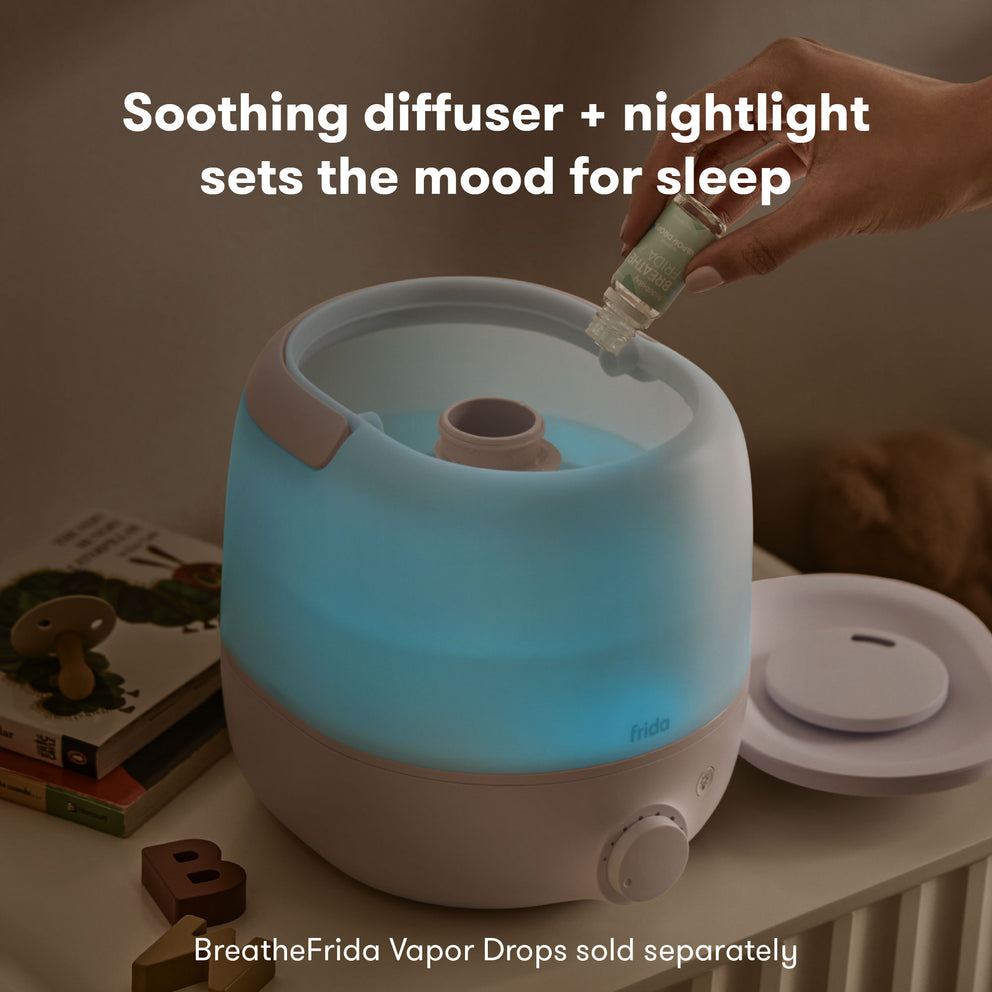
While the Frida Baby Humidifier is designed especially for nurseries and includes a gentle night light, it has a shorter run time than some models. However, it is praised for its quiet operation and ease of cleaning.
Credit: frida.com
Signs You Need To Replace Your Humidifier
Even with good care, humidifiers don’t last forever. Here are signs it’s time for a new one:
- The device no longer produces mist, even after cleaning.
- Cracks or leaks appear in the tank or base.
- Strange smells won’t go away after cleaning.
- The humidifier makes loud or unusual noises.
- Electronics, such as lights or buttons, stop working.
On average, a well-maintained humidifier lasts about 2–3 years. Heavy mineral buildup, mold, or broken parts can shorten this.
Preventing Future Problems
Prevention is easier than fixing problems later. Here are ways to avoid common issues:
- Use distilled water instead of tap water.
- Clean the humidifier regularly, following the guide above.
- Don’t let water sit in the tank for more than 24 hours.
- Store the device in a dry place when not in use.
- Check parts for wear and replace as needed.
- Keep the humidifier out of direct sunlight to avoid algae growth.
These habits will help your Frida Baby Humidifier last longer and work better.
Understanding Mist Output: How Much Is Normal?
Parents often worry if their humidifier is making enough mist. Mist output depends on several factors:
- Water level: Too low or too high can reduce mist.
- Room humidity: A humidifier may produce less mist as the room becomes more humid.
- Mist setting: Lower settings create less mist.
- Mineral buildup: Reduces mist over time.
A healthy Frida Baby Humidifier should create a visible, gentle mist stream. If you see little or no mist, try increasing the setting and cleaning the ultrasonic plate.
Here’s a quick reference for expected mist output:
| Setting | Expected Mist Output | Best For |
|---|---|---|
| Low | 30-50 ml/hr | Small rooms, night use |
| Medium | 60-80 ml/hr | Medium rooms, day use |
| High | 100-120 ml/hr | Large rooms, very dry air |
If your device is far below these levels, cleaning or repair may be needed.
The Importance Of Using The Right Water
The type of water you use in your humidifier matters more than many people think. Tap water often contains minerals like calcium and magnesium. Over time, these minerals create white dust or hard deposits inside the humidifier. This not only reduces mist output but can also be released into the air.
Distilled water is the best choice. It has very low mineral content, which helps prevent buildup and keeps your device running smoothly. If you must use tap water, clean the humidifier more often.

Credit: fridacustomersupport.zendesk.com
When To Use Frida Baby Humidifier: Best Practices
Using a humidifier at the right times can make a big difference for your baby’s comfort and health.
- During dry weather: Winter months or heated rooms often have dry air.
- When your child has a cold: Moist air helps ease breathing and soothe coughs.
- For skin issues: Eczema or dry skin can improve with higher humidity.
- In air-conditioned rooms: Air conditioning can dry out the air, too.
Best results come from placing the humidifier about 3 feet away from your child’s crib or bed, never directly next to them.
Safety Tips For Using Humidifiers In Baby Rooms
Safety is the top concern for any device used around babies. Follow these guidelines:
- Always place the humidifier on a flat, stable surface.
- Keep cords out of reach of children.
- Do not add essential oils unless the model is designed for it.
- Empty and clean the tank daily to prevent mold.
- Never use hot water or boiling water in a cool mist humidifier.
If you notice condensation on windows or walls, reduce the mist setting or run the humidifier for shorter periods.

Credit: www.youtube.com
What To Do If The Humidifier Smells Bad
A bad smell from your humidifier usually means bacteria or mold is growing inside. Here’s how to fix it:
- Unplug the device and empty all water.
- Clean the tank and base with a mix of vinegar and water.
- Let all parts air dry before reassembling.
- Use only fresh water each time you refill.
If the smell returns quickly, it may be time to replace the device.
Warranty And Replacement Information
The Frida Baby Humidifier comes with a limited warranty. This usually covers defects in materials or workmanship for one year from the purchase date. Keep your receipt or proof of purchase.
If your humidifier fails within the warranty period:
- Contact Frida Baby support.
- Provide your model number, purchase date, and a description of the issue.
- They may offer a replacement, repair, or refund, depending on the case.
For more details, visit the official Frida Baby Help Center.
Expert Tips To Get The Most From Your Humidifier
- Clean the device before first use.
- Run the humidifier for 30 minutes before bedtime to prep the room.
- Use the night light for a calming sleep environment.
- Check humidity levels with a hygrometer—ideal room humidity is 40–60%.
- Don’t add anything to the water unless the manual says it’s safe.
Frequently Asked Questions
Why Is My Frida Baby Humidifier Not Producing Mist Even Though It Has Water?
This is usually caused by mineral buildup on the ultrasonic plate or the mist nozzle being blocked. Clean both parts with white vinegar and use distilled water to prevent future issues.
Can I Use Essential Oils In My Frida Baby Humidifier?
Only use essential oils if your model has an essential oil tray. Adding oils directly to the water tank can damage the humidifier and void the warranty.
How Often Should I Clean My Frida Baby Humidifier?
Daily cleaning is best for safety. At a minimum, empty and rinse the tank every day and do a deep cleaning with vinegar once a week.
What Kind Of Water Should I Use In My Humidifier?
Distilled water is recommended. It prevents mineral buildup and keeps the mist clean and safe for your baby.
My Humidifier Is Making A Loud Noise. What Should I Do?
Unusual noise often means a blockage, low water level, or a part is loose. Turn off the device, check for debris, refill the tank, and make sure all parts are secure.
Conclusion
Getting your Frida Baby Humidifier back to working order doesn’t have to be stressful. With regular care and the right troubleshooting steps, you can keep your home’s air comfortable and safe for your little one. If you need more help, support is available—don’t hesitate to reach out. And remember, a well-maintained humidifier is a small investment in your family’s health and comfort.