
When it comes to choosing the right finish nailer for your woodworking or home improvement projects, you might find yourself stuck between two popular options: angled finish nailers and straight finish nailers. You want a tool that fits your needs perfectly—whether you’re working on tight corners, detailed trim, or basic construction.
But how do you decide which one will give you the best results and make your work easier? You’ll discover the key differences between angled and straight finish nailers, including their advantages, drawbacks, and the perfect situations to use each.
By the end, you’ll be confident in picking the right nailer that suits your project and skill level, saving you time, effort, and frustration. Ready to nail it? Let’s dive in!
Differences Between Angled And Straight Nailers
Angled and straight finish nailers look similar but differ in key ways. These differences affect how you use each tool and where each fits best. Understanding them helps pick the right nailer for your project.
The main differences lie in the nailer’s magazine design, the types of nails used, and how well each tool reaches tight spots. These factors impact your work speed, accuracy, and comfort.
Magazine Design And Nail Orientation
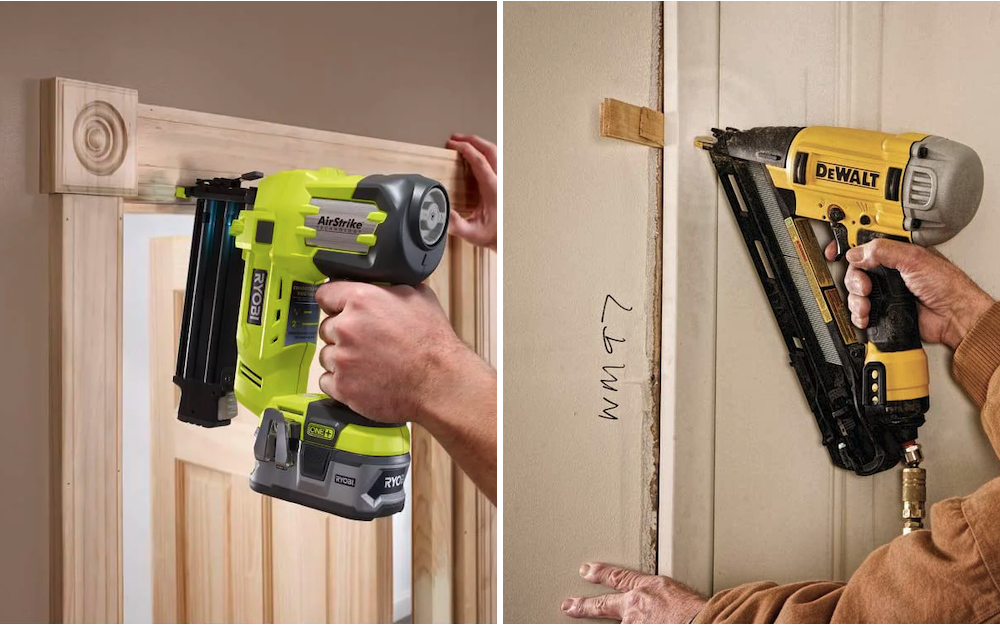
Angled nailers have a magazine set at a 15 to 34-degree angle. This slant helps place nails in tight corners and angled spaces with ease. It also reduces the chance of jamming when working near edges.
Straight nailers feature a magazine aligned straight with the barrel. This design works well for general nailing on flat surfaces. It allows for quick, straight nailing but can limit access in cramped spaces.
Types Of Nails Used
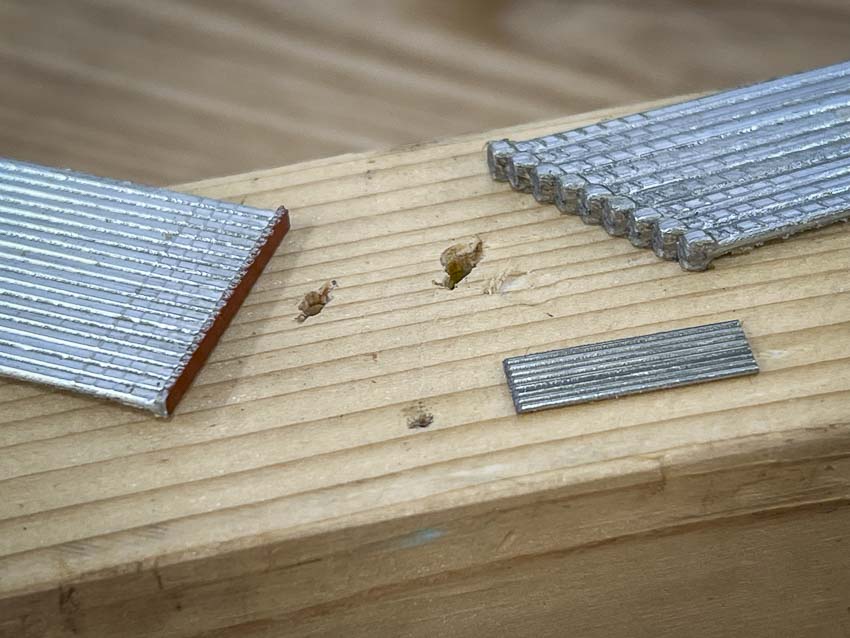
Angled finish nailers use nails collated in strips at an angle. These nails are often 15-gauge or 16-gauge, suited for trim and molding. The angled nails fit the magazine shape and provide strong holding power.
Straight nailers use nails collated in straight strips. They mostly take 16-gauge or 18-gauge nails. These nails are thinner and leave smaller holes, ideal for basic trim and general woodworking.
Accessibility And Reach
Angled nailers reach narrow corners and tight spots that straight nailers cannot. The angled magazine fits into confined areas, making detailed work easier. This advantage suits cabinetry and intricate trim jobs well.
Straight nailers struggle with tight angles and confined spaces. Their straight magazine can block access in corners or near edges. They work best on open, flat surfaces with plenty of room for nailing.

Credit: www.youtube.com
Advantages Of Angled Finish Nailers
Angled finish nailers offer distinct benefits that make them a favorite among carpenters and DIY enthusiasts. Their unique design helps tackle tasks that require precision and access in hard-to-reach areas. These advantages improve the quality and efficiency of woodworking projects.
Better Access To Tight Spaces
The angled magazine allows the nailer to fit into narrow corners easily. This feature makes it possible to work in tight spots where straight nailers cannot reach. It saves time and reduces the need for awkward hand positions.
Precision For Detailed Trim Work
Angled finish nailers provide better control for delicate tasks. They help set nails accurately without damaging the wood surface. This precision is essential for trim work that demands a clean, professional look.
Ideal For Molding And Cabinetry
The design is perfect for installing moldings and cabinetry parts. It allows nails to be placed at angles that secure pieces firmly. This results in stronger joints and a polished finish in woodworking projects.
Drawbacks Of Angled Finish Nailers
Straight finish nailers have been a staple in many workshops. They offer simplicity and affordability. Yet, these tools come with some drawbacks. These limitations can affect your work quality and efficiency.
Limited Access In Tight Corners
Straight finish nailers have a straight magazine design. This shape makes it hard to reach tight corners. Working in narrow spaces becomes a challenge. You may need to adjust angles often. This slows down your project and causes frustration. Angled finish nailers handle corners much better.
Less Ideal For Detailed Trim
Detailed trim work requires precision and control. Straight nailers are bulkier and less maneuverable. They struggle with delicate molding and fine woodwork. Nails may not go in at the best angle. This leads to visible holes and less clean finishes. Angled nailers provide better accuracy for detailed tasks.
Credit: www.bobvila.com
Advantages Of Straight Finish Nailers
Choosing the right finish nailer depends largely on the type of project you plan to undertake. Different nailers serve various tasks better due to their design and nail placement. Understanding these differences helps ensure efficiency and quality in your work. Below, we explore how angled and straight finish nailers perform across common project types.
Trim And Molding Applications
Angled finish nailers excel in trim and molding tasks. Their angled magazine fits into tight corners easily. This feature allows precise nailing near edges and detailed profiles. Straight nailers struggle in these spots because their nails come straight out. Angled nailers reduce the risk of splitting thin moldings. They also help reach awkward angles without adjusting the material too much.
General Construction Tasks
Straight finish nailers work well for general construction work. They drive nails directly and quickly into flat surfaces. Their design offers more versatility for larger projects. Straight nailers handle framing and basic wood joining efficiently. Angled nailers can be less practical here due to their limited nail capacity. For fast, broad nailing jobs, straight nailers save time and effort.
Cabinetry And Paneling
Cabinetry and paneling often require careful handling and precision. Angled finish nailers provide the control needed for these delicate tasks. Their ability to access tight joints ensures clean, hidden nails. Straight nailers might leave more visible holes and can be harder to position in small spaces. For fine woodworking like cabinets, the angled model offers superior performance.
Drawbacks Of Straight Finish Nailers
Using finish nailers safely ensures your projects go smoothly without injuries. Both angled and straight finish nailers require care and attention. Understanding safety tips helps prevent accidents and protects your hands and eyes. Follow these simple guidelines to work confidently and safely with any finish nailer.
Protective Gear
Always wear safety glasses to protect your eyes from flying debris. Use ear protection if you work for long periods, as nailers can be loud. Gloves help protect your hands from sharp nails and splinters. Wear sturdy shoes to protect your feet in case you drop the tool or nails. Dress in close-fitting clothes to avoid getting caught in moving parts.
Proper Handling Techniques
Hold the nailer firmly with both hands for better control. Keep your fingers away from the trigger until you are ready to nail. Always point the nailer away from your body and others. Press the nailer firmly against the work surface before pulling the trigger. Never disable safety features or use the tool if it is damaged. Store the nailer unloaded and unplugged when not in use.
Credit: www.protoolreviews.com
Frequently Asked Questions
What Is Better, An Angled Or Straight Finish Nailer?
An angled finish nailer excels in tight spaces and detailed trim work. A straight finish nailer suits general tasks and leaves smaller holes. Choose angled for precision in corners; pick straight for cost-effectiveness and versatility. Your project type and workspace dictate the best option.
What Is An Angled Nail Gun Used For?
An angled nail gun drives nails at an angle, allowing easy access to tight corners and confined spaces. It’s ideal for trim, molding, and cabinetry.
Which Nail Gun Is Better, 21 Degree Or 30 Degree?
A 21-degree nail gun offers better precision for detailed trim work. A 30-degree model accesses tight corners easier. Choose 21-degree for finish quality; pick 30-degree for versatility in confined spaces.
Why Are Finish Nails Angled?
Finish nails are angled to reach tight corners and awkward spaces easily. This design improves precision in trim and molding work.
What Is The Main Difference Between Angled And Straight Finish Nailers?
Angled nailers have a slanted magazine for tight spaces; straight nailers have a straight magazine for general use.
Conclusion
Choosing between an angled finish nailer and a straight one depends on your project. Angled nailers fit tight spaces and detailed trim work well. Straight nailers work best for general tasks and leave smaller nail holes. Consider your workspace and the type of job before buying.
Each tool has strengths for different needs. Pick the nailer that fits your work style and project demands. This way, you get the best results with less hassle.